
When choosing a spotting scope, one of the first decisions you’ll need to make is whether to select an angled spotting scope or a straight spotting scope. Both designs offer excellent optical performance, but they differ in ergonomics, ease of use, and how quickly you can acquire a target.
Hunters, birdwatchers, and long-range shooters often prefer one design over the other depending on how they plan to use their optic. If you're still selecting your optic, explore our full selection of spotting scopes to compare magnification ranges, objective sizes, and premium optical systems from leading manufacturers.
In this guide, we’ll break down the key differences between angled and straight spotting scopes so you can choose the design that best fits your hunting or shooting setup.
What Is an Angled Spotting Scope?
An angled spotting scope features an eyepiece positioned at approximately a 45-degree angle relative to the body of the scope. Instead of looking straight through the optic, the user looks down into the eyepiece. This ergonomic design allows for comfortable viewing when the scope is mounted on a tripod for long periods of time.
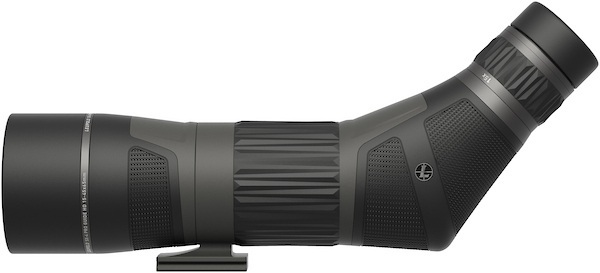
Angled scopes are extremely popular for wildlife observation and birdwatching because they reduce neck strain and allow observers to comfortably glass terrain for extended sessions.
Advantages of Angled Spotting Scopes
- More comfortable for extended glassing sessions
- Allows multiple people of different heights to use the same tripod setup
- Works well when observing objects high above eye level
- Often allows the tripod to be positioned lower for greater stability
- Popular for birdwatching and digiscoping photography
Potential Drawbacks
- Can take longer to initially locate targets
- Requires a small learning curve for new users
- Not always ideal for vehicle window mounts
What Is a Straight Spotting Scope?
A straight spotting scope places the eyepiece directly in line with the body of the scope, allowing the user to look straight through the optic similar to a rifle scope or binoculars. This design makes it easy to quickly align the scope with a target.
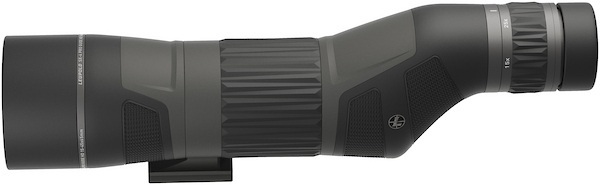
Straight spotting scopes are commonly used for hunting and long-range shooting because they make it easier to quickly locate animals or targets in the same direction you're already looking.
If you're selecting a spotting scope for the range, you may also want to review our guide on choosing the right spotting scope to understand magnification ranges and optical performance.
Advantages of Straight Spotting Scopes
- Faster and more intuitive target acquisition
- Easier for beginners to align with distant objects
- Excellent for scanning landscapes when hunting
- Ideal for vehicle window mounts
- Commonly used by spotters during long-range shooting
Potential Drawbacks
- Requires a taller tripod for comfortable viewing
- Less comfortable during extended observation sessions
- More difficult to use when viewing objects high above the horizon
Angled vs Straight Spotting Scopes: Key Differences
| Feature | Angled Spotting Scope | Straight Spotting Scope |
|---|---|---|
| Viewing Position | 45° eyepiece angle | Straight-through design |
| Comfort | Better for long viewing sessions | Less ergonomic for extended use |
| Target Acquisition | Slightly slower | Faster and more intuitive |
| Tripod Height | Lower tripod height possible | Requires taller tripod |
| Common Use | Birdwatching, wildlife observation | Hunting, range spotting |
Best Angled Spotting Scope Uses
Angled spotting scopes excel when comfort and extended observation are priorities. Many birdwatchers and wildlife observers prefer angled designs because they make it easier to glass for long periods without neck fatigue.
- Birdwatching
- Wildlife observation
- Digiscoping photography
- Astronomy
- Shared viewing on the same tripod
Models like Leupold spotting scopes and Vortex spotting scopes are available in angled configurations designed for serious outdoor use.
Best Straight Spotting Scope Uses
Straight spotting scopes are often preferred by hunters and shooters because they allow faster target acquisition. When you're already looking toward a distant ridge or hillside, aligning the spotting scope directly with your line of sight makes locating animals much easier.
- Big game hunting
- Long-range shooting
- Spotting bullet impacts at the range
- Vehicle window mounting
- Scanning terrain for distant movement
Which Spotting Scope Design Should You Choose?
Both angled and straight spotting scopes deliver excellent optical performance, and the best choice depends on how you plan to use the optic.
- Choose an angled spotting scope if you plan to spend long periods glassing wildlife or birdwatching.
- Choose a straight spotting scope if fast target acquisition is important for hunting or shooting applications.
Many experienced outdoorsmen eventually use both designs depending on the situation. Regardless of which style you choose, selecting high-quality optics and stable tripod support will greatly improve your ability to identify distant targets.
Shop Spotting Scopes at The Optic Zone
At The Optic Zone, we offer a wide selection of premium spotting scopes designed for hunters, birdwatchers, and long-range shooters. Our lineup includes trusted optics from industry-leading brands known for optical clarity, rugged durability, and reliable field performance.
Browse our full selection of spotting scopes to compare top models and find the right optic for your next hunting trip or range session.