When choosing binoculars, one of the most important design differences is roof prism vs porro prism construction. While both systems provide upright images and effective magnification, they differ in optical layout, performance characteristics, durability, and price. Understanding these differences helps you select binoculars that best match your hunting, birdwatching, or outdoor viewing needs.
Roof Prism Binoculars
What is a roof prism?
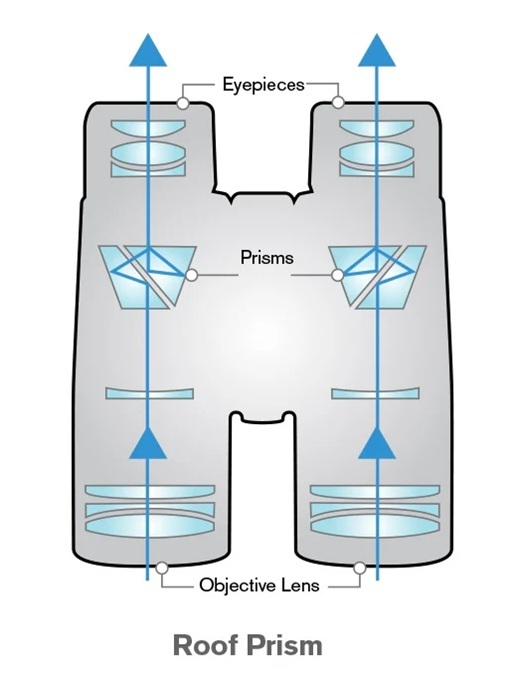
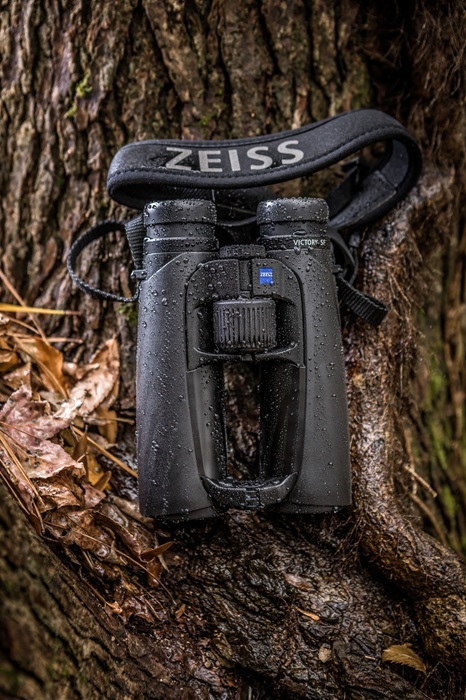
Roof prism binoculars use prisms aligned in a straight line with the barrels, creating a sleek, compact design. The light path folds internally through a “roof” edge, allowing both objective lenses and eyepieces to sit in line.
Advantages
Compact and lightweight – Easier to carry for long hunts or hikes
Durable construction – Better sealing and waterproofing potential
Modern ergonomics – Slim profile fits hands comfortably
High-end optical coatings available – Phase correction and dielectric coatings enhance clarity
Disadvantages
More expensive to manufacture – Precision alignment and coatings add cost
May require advanced coatings for peak performance – Without them, contrast can suffer
Best uses
- Deer, Elk hunting and mobile hunts
- Birdwatching and hiking
- Travel and general outdoor observation
- Situations requiring waterproof, rugged binoculars
Porro Prism Binoculars
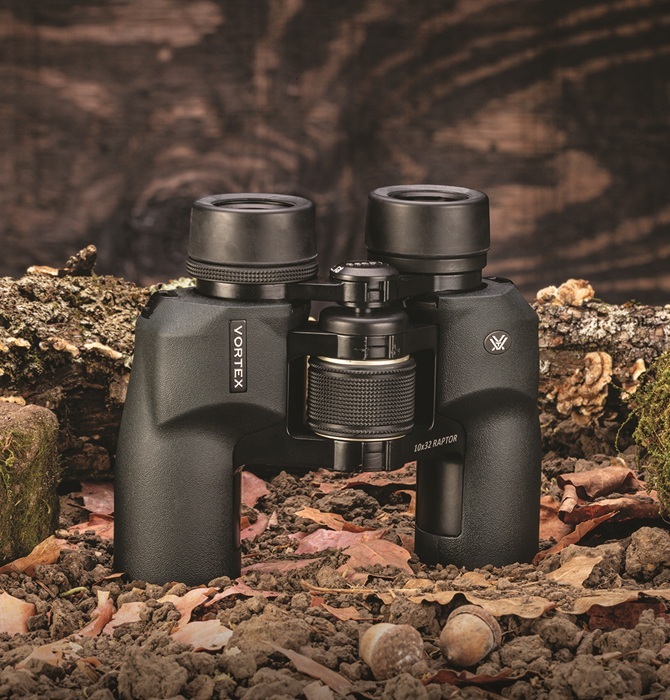
What is a porro prism?
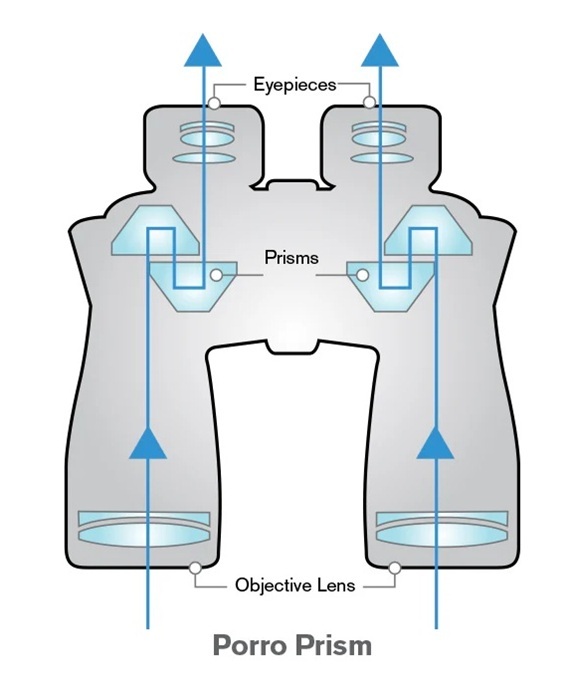
Porro prism binoculars use an offset prism design that creates the classic zig-zag barrel shape. This layout produces a wider distance between objective lenses than eyepieces.
Advantages
Excellent depth perception – Wider objective spacing enhances 3D image effect
Strong optical performance for the price – Typically brighter and higher contrast at lower cost
Wide field of view – Great for scanning landscapes and tracking movement
Simple prism design – Fewer complex coatings required
Disadvantages
Bulkier design – Less compact and harder to pack
More vulnerable to dust and moisture – Sealing can be less robust
Heavier weight – Can fatigue users during extended use
Best uses
- Backyard wildlife viewing and birdwatching
- Marine and boating applications
- Budget-conscious buyers wanting strong optical performance
- Stationary glassing scenarios
Roof vs Porro Prism: Side-by-Side Comparison
| Feature | Roof Prism | Porro Prism |
|---|---|---|
| Shape | Straight barrels | Offset zig-zag barrels |
| Size & weight | Compact, lightweight | Larger, heavier |
| Durability | Typically more rugged and waterproof | Often less sealed |
| Depth perception | Moderate | Excellent 3D effect |
| Optical value | Higher cost for premium performance | Strong performance at lower cost |
| Field of view | Good | Often wider |
| Best for | Hunting, travel, rugged use | Budget optics, marine, backyard viewing |
Which Prism Design Should You Choose?
Choose roof prism binoculars if you want:
- Lightweight portability
- Weatherproof durability
- Modern ergonomics
- Premium performance in demanding conditions
Choose porro prism binoculars if you want:
- Maximum optical value for the price
- Strong depth perception and immersive image
- Wide field of view for scanning
- A budget-friendly yet capable option
Expert Tip
While porro prism binoculars often provide excellent image quality for the money, modern roof prism binoculars with phase-corrected and dielectric coatings can match or exceed porro performance while offering superior durability and portability — which is why they dominate hunting and outdoor markets today.
FAQ
Are roof prism binoculars better than porro prism binoculars?
Neither is universally better. Roof prism binoculars excel in durability and compactness, while porro prism binoculars often provide better optical value and depth perception.
Why are roof prism binoculars more expensive?
Roof prism designs require tighter tolerances and advanced coatings to maintain image quality, increasing manufacturing complexity and cost.
Do porro prism binoculars provide better image quality?
They can deliver excellent brightness and depth perception, especially at lower price points, but premium roof prism models can equal or surpass them.
Are roof prism binoculars more waterproof?
Yes, their straight-barrel design allows better sealing, making them ideal for harsh weather conditions.
Final Thoughts
Understanding roof vs porro prism binocular design helps you make a smarter buying decision. If you prioritize compact durability and field portability, roof prism binoculars are often the best choice. If you want strong optical performance and depth perception at a lower price, porro prism binoculars remain an excellent option.