
A rifle scope mount connects your scope to your rifle. It may seem like a small part of the setup, but the mount has an important job. It must hold the scope securely, maintain proper alignment, and provide a comfortable shooting position.
This guide explains the most common types of rifle scope mounts, where they are normally used, and what you should check before ordering.
Quick Mount Guide
- Traditional hunting rifle: Direct-fit rings, Weaver-style mounts, or a one-piece rifle-specific mount.
- Long-range rifle: Picatinny rail with matching scope rings.
- AR-style rifle: One-piece cantilever mount.
- Rimfire rifle: Dovetail rings or Weaver-style rings, depending on the rifle.
- Older rifle: Match the existing mounting system or replace the complete base and ring setup.
What Is a Rifle Scope Mount?
Most scope mounting systems have two main parts:
- The base or rail attaches to the rifle.
- The scope rings hold the scope and connect it to the base.
Some mounts combine the rings and base into one solid unit. Other rings attach directly to the rifle without using a separate base.
The mount must fit both the rifle and the scope. A mount that fits the scope tube may not fit the rifle, and a mount made for the rifle may still be the wrong height for the scope.
Common Types of Rifle Scope Mounts
Weaver-Style Scope Mounts
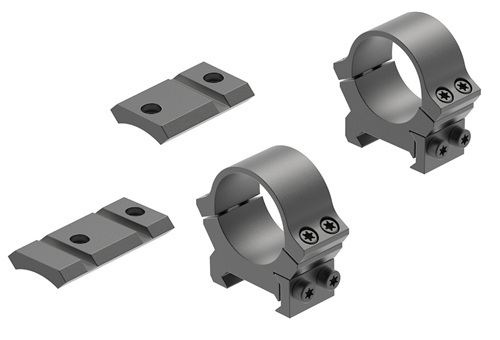
A Weaver-style mount uses a base with cross slots. The rings clamp to the sides of the base, and a crossbolt fits into one of the slots. This helps prevent the rings from moving forward or backward under recoil.
Weaver-style mounts have been used on hunting rifles, shotguns, muzzleloaders, and rimfire rifles for many years.
Advantages:
- Simple and dependable design.
- Available for many rifle models.
- Usually lightweight.
- Often less expensive than heavier rail systems.
- Available with one-piece or two-piece bases.
Best for: Hunting rifles and general-purpose rifle setups.
Weaver and Picatinny mounts look similar, but their cross slots are not always the same size. Do not assume every Weaver and Picatinny part will fit together correctly.
Picatinny Scope Mounts
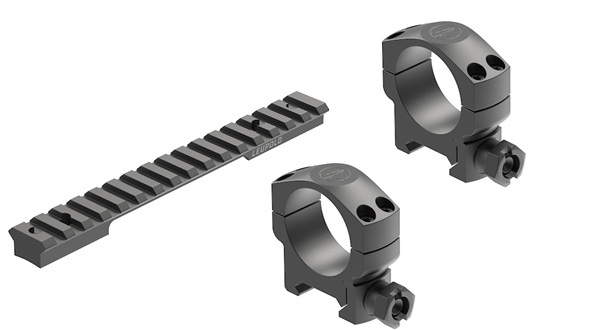
A Picatinny rail also has cross slots, but the slots follow a more consistent size and spacing. The rail normally provides several places to position the scope rings.
This makes it easier to adjust ring spacing and move the scope forward or backward. Picatinny systems are commonly used on AR-style rifles, tactical rifles, and long-range rifles.
Advantages:
- Strong mounting surface.
- Several ring-position options.
- Works with many different rings and mounts.
- Good choice for heavy scopes.
- Available with built-in elevation for long-range shooting.
Best for: Tactical rifles, long-range rifles, target rifles, and AR-style platforms.
A Picatinny rail can add more weight than a small two-piece hunting base. However, it provides more flexibility when scope position and ring spacing are important.
Integral Scope Rings
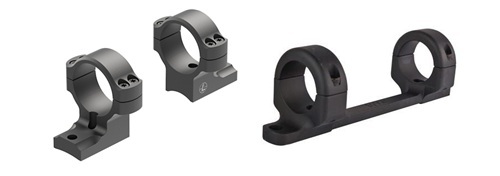
Integral ringmounts are a combination of the ring and base into one solid piece that attach directly to the receiver. They do not require a separate base.
These rings are often made for a specific rifle manufacturer and model. Examples include mounting systems from Leupold BackCountry and DNZ Game Reaper.
Advantages:
- Fewer separate parts.
- Clean and simple appearance.
- Can reduce the total mounting weight.
- Often allows the scope to sit close to the rifle.
Best for: Hunting rifles with a factory mounting surface or rifle-specific ring system.
This ringmount system must match the exact rifle. You should also confirm the scope tube diameter and ring height before ordering.
Dovetail Scope Mounts
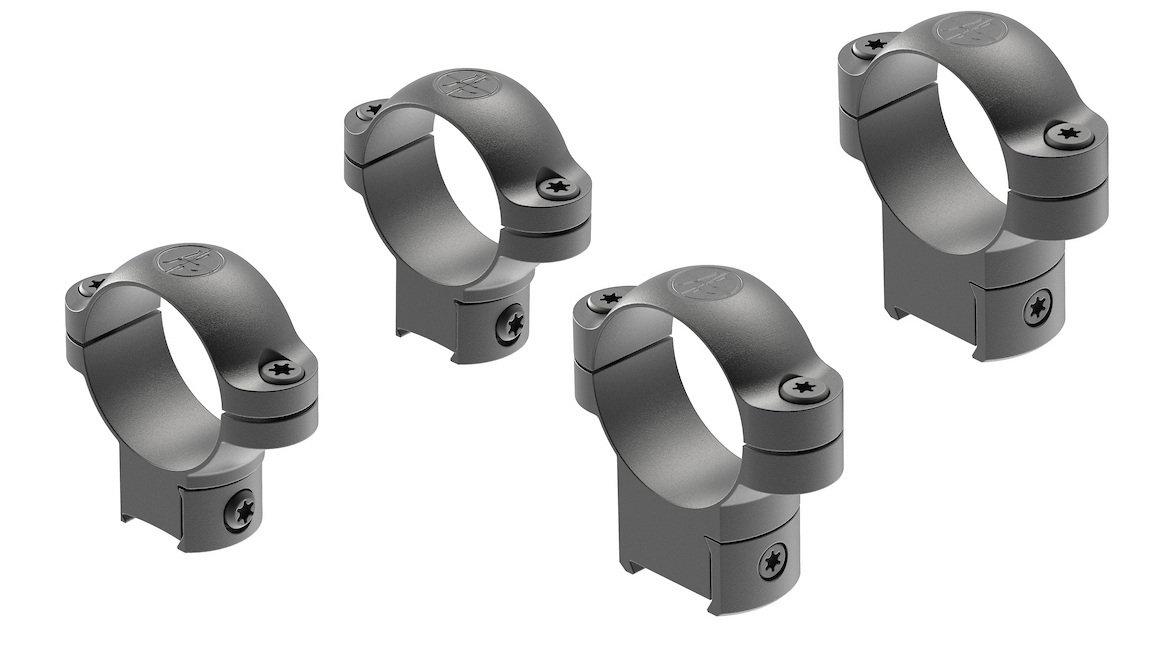
A dovetail rail has angled sides that allow the rings to clamp onto it. Most dovetail rails do not have the cross slots found on Weaver and Picatinny bases.
Dovetail mounts are commonly found on CZ, Ruger, Sako, rimfire rifles, air rifles, and some centerfire rifles with factory-machined receivers.
Common rimfire dovetail sizes include 3/8 inch and 11mm. These sizes are close, but they are not always interchangeable.
Advantages:
- Simple mounting system.
- Usually lightweight.
- Often does not require a separate base.
- Works well on lower-recoil rifles.
Best for: Rimfire rifles, air rifles, and rifles with a built-in dovetail receiver.
Always verify the dovetail size. Ordering rings that are close to the correct size does not guarantee a safe or secure fit.
Standard or STD Scope Mounts
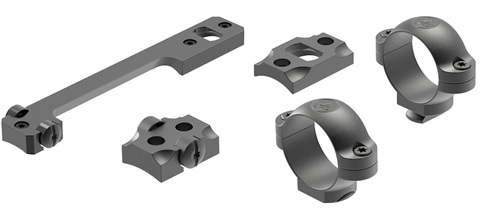
A standard mount, often marked as an STD mount, uses a front ring that turns into the base. The rear ring is held between two windage-adjustment screws.
This system was common on older hunting rifles. The rear screws allow some side-to-side adjustment before the scope is sighted in.
Advantages:
- Allows mechanical windage adjustment.
- Traditional appearance.
- Still available for some older rifle models.
Best for: Older rifles that already have a matching STD base or traditional rifle builds.
For a new setup, many customers choose a simpler modern mounting system. However, STD mounts can still be useful when matching parts already installed on a rifle.
Dual Dovetail Scope Mounts
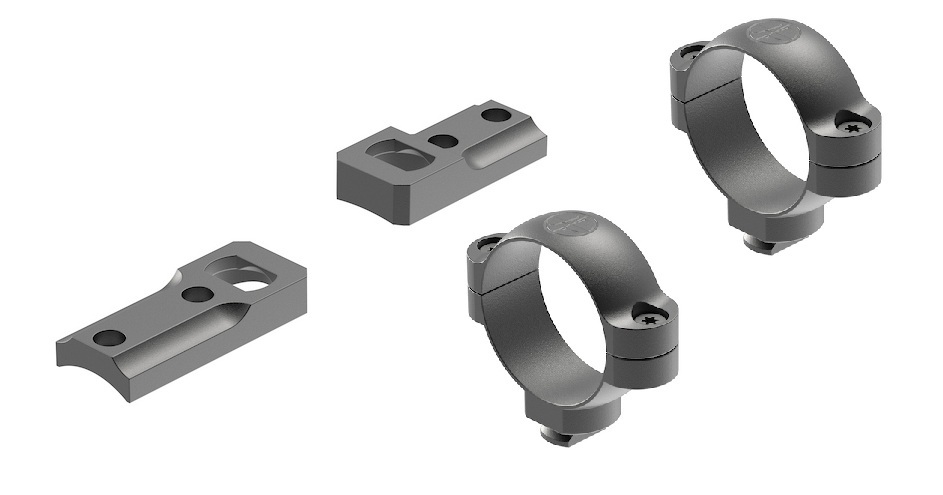
A dual dovetail system uses front and rear rings that turn into matching bases. Each ring is rotated into position and locked in place.
Despite the name, this is different from the straight dovetail rails commonly found on rimfire rifles.
Advantages:
- Strong connection between the rings and bases.
- Clean traditional appearance.
- Commonly available in steel.
- Suitable for many hunting rifles.
Best for: Traditional hunting rifles and rifles that already have matching dual dovetail bases.
The scope normally needs to be removed from the rings before the rings can be removed from the bases. This makes the system less convenient when the scope needs to be removed regularly.
Quick-Release Scope Mounts
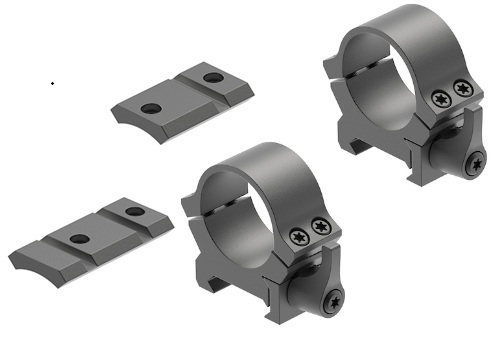
A quick-release mount allows the scope to be removed without using normal hand tools. Levers or other locking parts hold the rings or one-piece mount to the rail.
Some quick-release mounts can return close to the original zero after the scope is removed and reinstalled. Results depend on the quality of the mount, the rail, and proper installation.
Advantages:
- Fast scope removal.
- Useful when traveling with the rifle.
- Allows different optics to be used on the same rifle.
- Can provide quick access to backup sights.
Best for: Tactical rifles, dangerous-game rifles, and rifles used with more than one optic.
Quick-release mounts are normally more expensive than basic fixed rings. The locking levers must also be adjusted correctly.
One-Piece and Two-Piece Mounting Systems
One-piece and two-piece describe how the mounting parts are arranged. These designs may be available with Weaver, Picatinny, direct-fit, and other mounting systems.
One-Piece Scope Mounts
A one-piece mount connects both rings as one unit or uses one continuous base beneath the rings.
Possible advantages:
- Keeps the rings aligned as one unit.
- Provides a strong mounting platform.
- May offer more scope-position options.
- Can simplify installation.
Possible disadvantages:
- May weigh more.
- Can cover part of the rifle’s loading or ejection area.
- Some models provide less freedom to change ring spacing.
Two-Piece Scope Mounts
A two-piece system uses separate front and rear bases or separate rings that attach directly to the rifle.
Possible advantages:
- Usually lighter.
- Leaves more open space above the rifle action.
- Provides a traditional hunting-rifle appearance.
- May make loading and unloading easier.
Possible disadvantages:
- Fewer options for changing ring position.
- Proper alignment depends on the rifle and base installation.
Learn more in our guide to one-piece versus two-piece scope bases.
Mount Features You May See
The following terms are often described as mount types, but they are really features or special designs added to a mounting system.
Cantilever Mounts
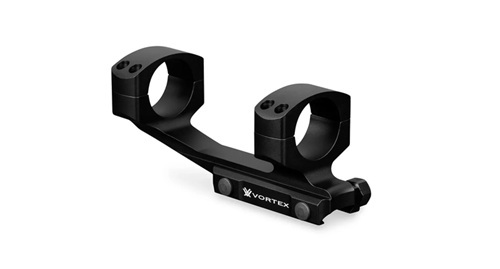
A cantilever mount moves the scope forward from the point where the mount connects to the rifle.
This is especially useful on an AR-style rifle. The forward position helps the shooter obtain proper eye relief without attaching part of the mount to the handguard.
Best for: AR-15 rifles and other modern sporting rifles.
Offset Optic Mounts
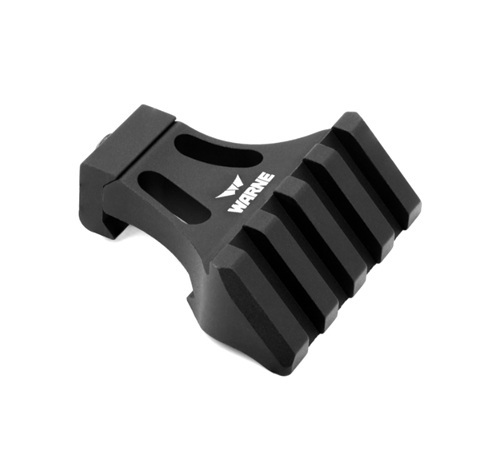
An offset mount places a secondary optic to the side of the main scope. Many hold a small red dot at approximately a 45-degree angle.
The shooter can rotate the rifle slightly to move between the magnified scope and the close-range sight.
Best for: Rifles using a primary scope and a secondary close-range optic.
20 MOA and Canted Bases
A 20 MOA base is slightly higher at the rear than at the front. This changes the scope’s starting angle and can provide more usable elevation adjustment for longer distances.
Best for: Long-range rifles that may need more elevation adjustment than a flat base provides.
Most hunters shooting at normal distances do not automatically need a 20 MOA base. The correct choice depends on the scope’s adjustment range, cartridge, rifle, and expected shooting distance.
How to Choose the Correct Scope Mount
Do not choose a mount by appearance alone. Check the following details before ordering.
1. Rifle Manufacturer and Model
The base or direct-fit rings must match the rifle. You may also need to know the action length, receiver type, or production year.
2. Scope Tube Diameter
The inside diameter of the rings must match the scope’s main tube. Common sizes include:
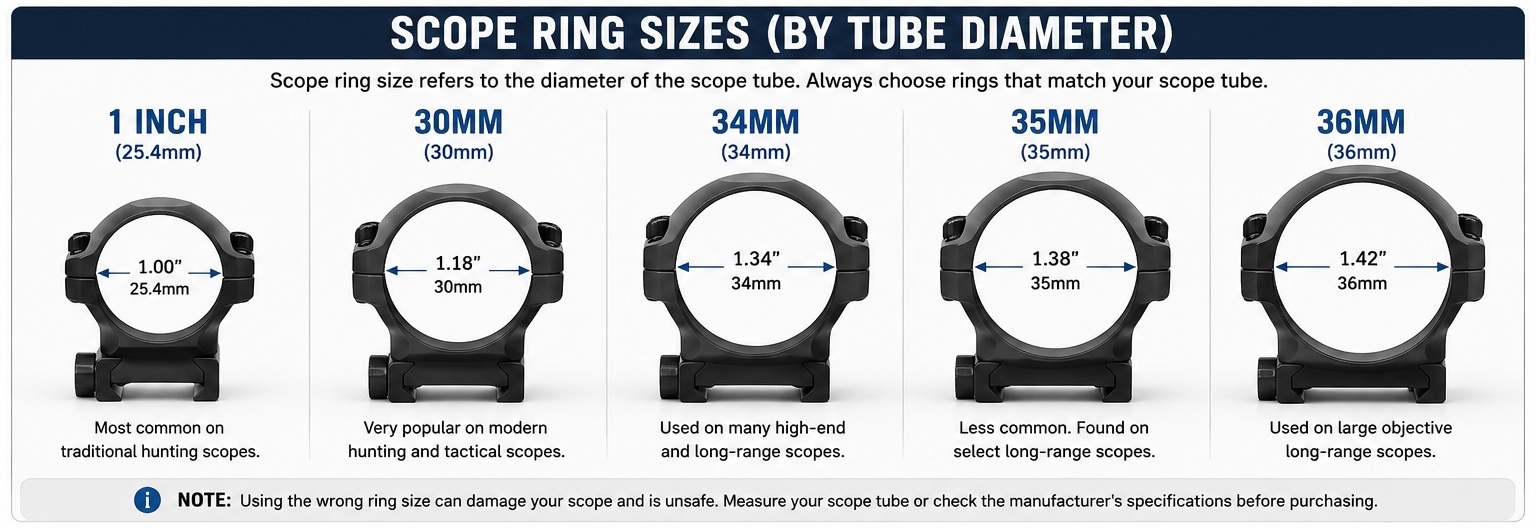
A 30mm scope cannot be safely installed in 1-inch rings, and ring inserts should only be used when approved by the manufacturer.
3. Ring Height
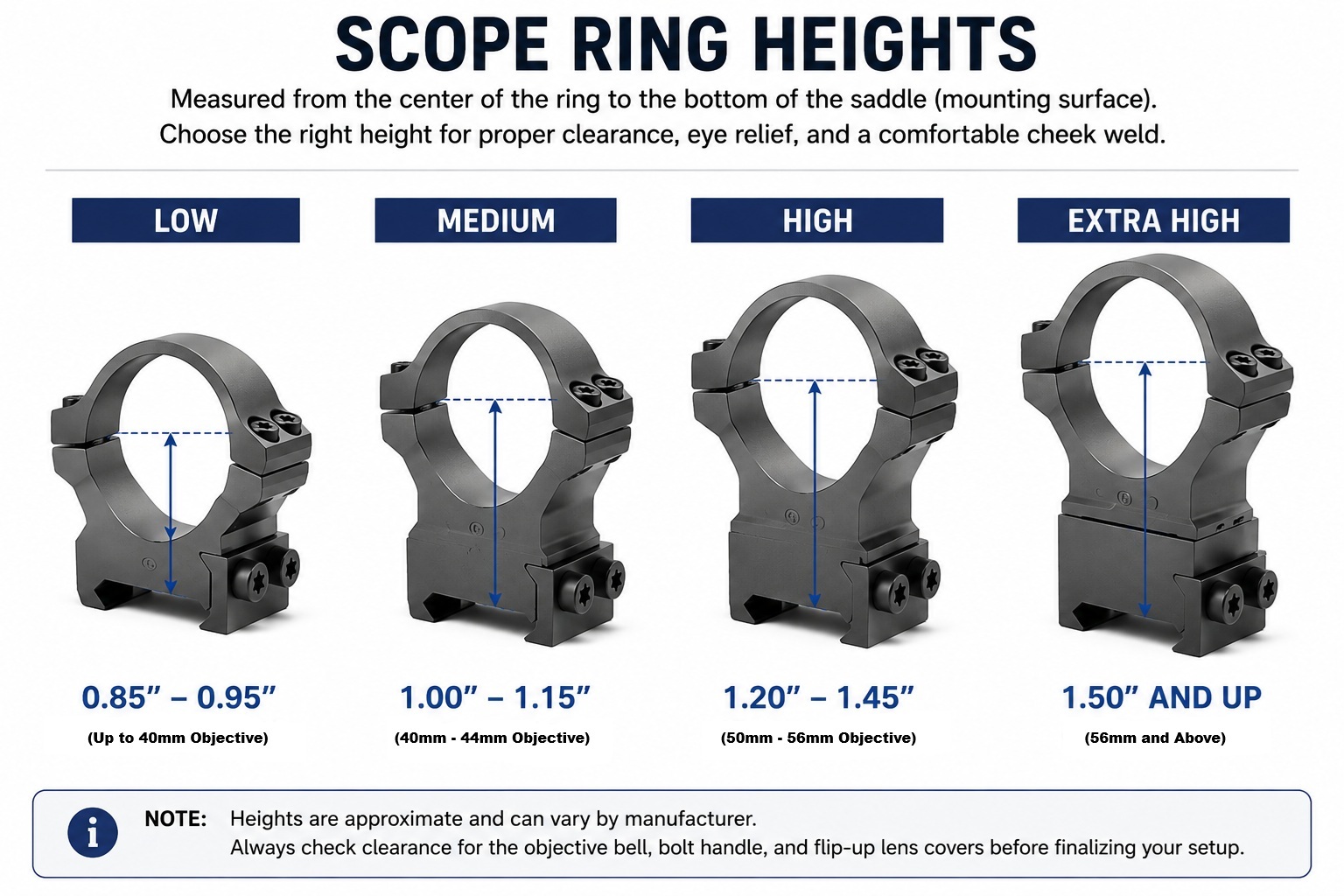
The rings must be high enough for the objective bell to clear the barrel, receiver, and base. You may also need clearance for lens covers, the bolt handle, and the scope’s power-adjustment ring.
Higher is not always better. Mounting the scope unnecessarily high can make it harder to maintain a comfortable and repeatable cheek position.
Use our scope ring height guide to learn how objective size, base thickness, and rifle design affect the correct height.
4. Eye Relief
The scope must sit far enough forward or backward to provide a full image when the rifle is held naturally.
This is especially important with AR-style rifles, short receivers, long scopes, and scopes with large turret sections.
5. Rifle Use
Think about how the rifle will be used.
- Lightweight hunting rifle: Consider direct-fit rings or a lightweight two-piece system.
- Long-range rifle: Consider a Picatinny rail and strong matching rings.
- AR-style rifle: A cantilever mount usually provides better scope position.
- Rimfire rifle: Use rings that match the rifle’s dovetail or cross-slot rail.
- Heavy-recoiling rifle: Choose a strong mounting system with proper recoil support.
Common Scope Mount Buying Mistakes
- Buying a base for the wrong rifle model.
- Forgetting to check the rifle’s action length.
- Ordering rings with the wrong tube diameter.
- Choosing rings that are too low for the objective lens.
- Mounting the scope much higher than necessary.
- Assuming Weaver and Picatinny parts are always interchangeable.
- Confusing an 11mm dovetail with a 3/8-inch dovetail.
- Failing to check bolt-handle clearance.
- Choosing a mount that does not provide enough eye-relief adjustment.
- Overtightening screws during installation.
Experience From Helping Customers Choose Mounts
The Optic Zone has helped customers select rifle scopes, rings, bases, and mounting systems since 2002. One of the most common mounting problems is not caused by a defective scope or a poorly made mount. It happens because two parts were not designed to fit together.
Customers often know their rifle brand and scope model but may not know the action length, tube diameter, rail style, or required ring height. Checking these details before ordering can prevent poor eye relief, contact between the scope and barrel, interference with the bolt handle, and unnecessary returns.
We recommend choosing the mount in this order:
- Confirm the exact rifle fit.
- Confirm the scope tube diameter.
- Determine the required ring height.
- Check eye relief and scope position.
- Choose the material, brand, and style you prefer.
Starting with fit instead of appearance gives you a better chance of getting the correct mount the first time.
Which Type of Scope Mount Is Best?
There is no single scope mount that is best for every rifle. The best mount is the one that fits the rifle and scope correctly while supporting the way the rifle will be used.
- Best for a traditional hunting rifle: Direct-fit rings, Weaver-style bases, or a lightweight rifle-specific mount.
- Best for a long-range rifle: Picatinny rail and matching rings.
- Best for an AR-style rifle: One-piece cantilever mount.
- Best for many rimfire rifles: Correctly sized dovetail rings.
- Best for easy scope removal: A quality quick-release mount.
- Best for matching an older setup: STD, dual dovetail, or another system that matches the existing base.
For more help, read our guide on how to choose the right scope mount for your rifle.
Frequently Asked Questions
Are Weaver and Picatinny mounts the same?
No. They both use cross slots, but the slot dimensions and spacing may differ. Some combinations appear to fit but may not provide the best connection. Use rings designed for your base whenever possible.
Should I choose a one-piece or two-piece base?
Both can work well. A one-piece base normally provides more mounting positions. A two-piece base is often lighter and leaves more open space above the rifle action.
What is the best mount for a hunting rifle?
Many hunting rifles work well with direct-fit rings, Weaver-style bases, or lightweight two-piece mounts. The best choice depends on the rifle, scope, recoil, and desired mounting height.
What is the best scope mount for an AR-15?
A one-piece cantilever mount is usually the most practical option. It moves the scope forward to provide better eye relief while keeping the mount attached to the receiver.
Do I need a 20 MOA scope base?
Not for most normal hunting distances. A 20 MOA base is mainly used when a shooter needs more elevation adjustment for longer-range shooting.
How do I know which ring height I need?
Ring height depends on the scope’s objective size, barrel contour, receiver, base thickness, bolt handle, and desired cheek position. The goal is usually to mount the scope as low as practical without anything touching.
Can I reuse my current scope rings?
You may be able to reuse them if they match the new scope’s tube diameter, the rifle’s base or rail, and the required height. Inspect the rings and screws for damage before reinstalling them.
Should I use thread locker on the screws?
Follow the instructions provided by the mount manufacturer. Some screws already have a locking treatment applied. Use the recommended torque settings and do not overtighten the screws.
Shop Scope Mounts, Rings, and Bases
Once you know which mounting system your rifle requires, browse our complete selection of scope mounts, rings, and bases. You can also shop our selection of rifle scopes to complete your setup.
When asking for help with fit, provide the rifle manufacturer and model, action length when applicable, scope model, tube diameter, and objective size. These details make it much easier to identify the correct mounting system.